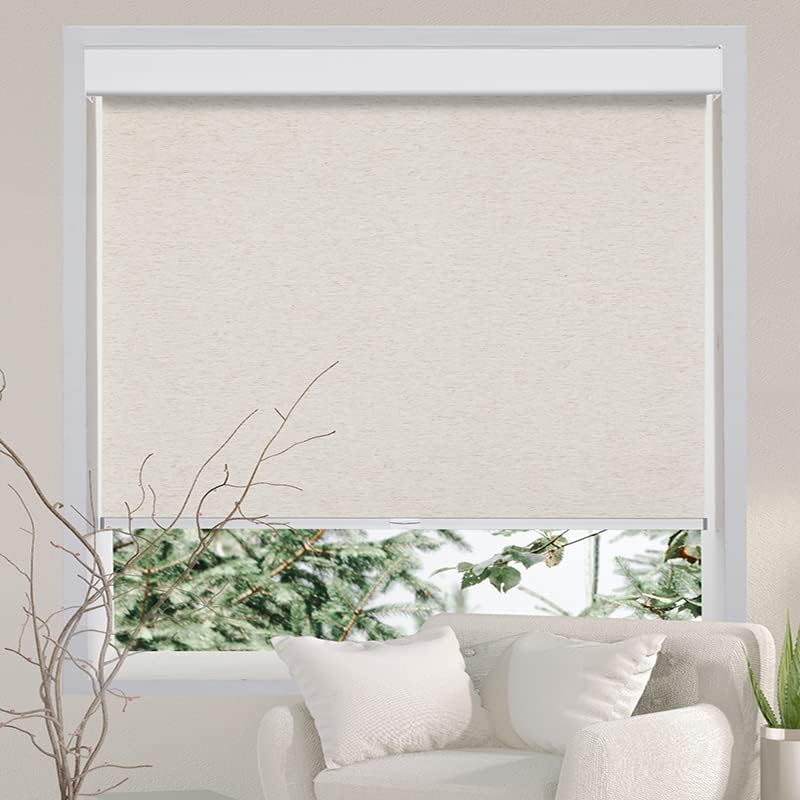
If you’ve been shopping for window treatments with a natural, organic feel — bamboo, seagrass, jute, rattan-weave materials — you’ve probably run into two different terms for what looks like the same general product: roman shades and roller shades. Here’s the quick version: a roman shade folds up into neat horizontal pleats as it rises, controlled by cords or a cordless lift mechanism. A roller shade rolls up into a tight cylinder at the top of the window. Both come in natural woven materials. The difference is in how the fabric or woven panel moves — and that difference turns out to matter quite a bit for texture, light control, stack height, and long-term wear. This guide walks you through the tradeoffs side by side, brings in two less-common alternatives worth knowing, and ends with a clear decision rule so you can stop second-guessing your spec sheet.
Why the Lift Mechanism Changes Everything About Woven Materials
This is the part most buyers skip over, and it’s where decisions go sideways.
Natural woven materials — bamboo slats, matchstick reeds, seagrass, jute, or hybrid grasscloth panels — are fundamentally different from the synthetic or woven polyester fabrics used in standard roller or roman shades. They have a fixed weave tension. They don’t drape the same way in every direction. And critically, they don’t tolerate tight rolling as gracefully as a synthetic fabric does.
When you roll a woven-wood panel around a 1.5-inch or 2-inch roller tube repeatedly over months or years, the individual reeds or fibers experience compression stress at the outermost fold point. Based on product Q&A pages and owner feedback aggregated by Houzz’s editorial team in their coverage of woven-wood shade comparisons, owners of bamboo roller shades in lower price tiers have reported cracking or fraying at the roll point within 12–24 months of daily use. This is not a universal failure — premium woven-wood roller products from retailers such as The Shade Store and Smith & Noble use wider-diameter tubes and pre-treated reeds specifically to reduce this — but it is a real durability consideration that does not apply equally to roman shades, which fold rather than roll.
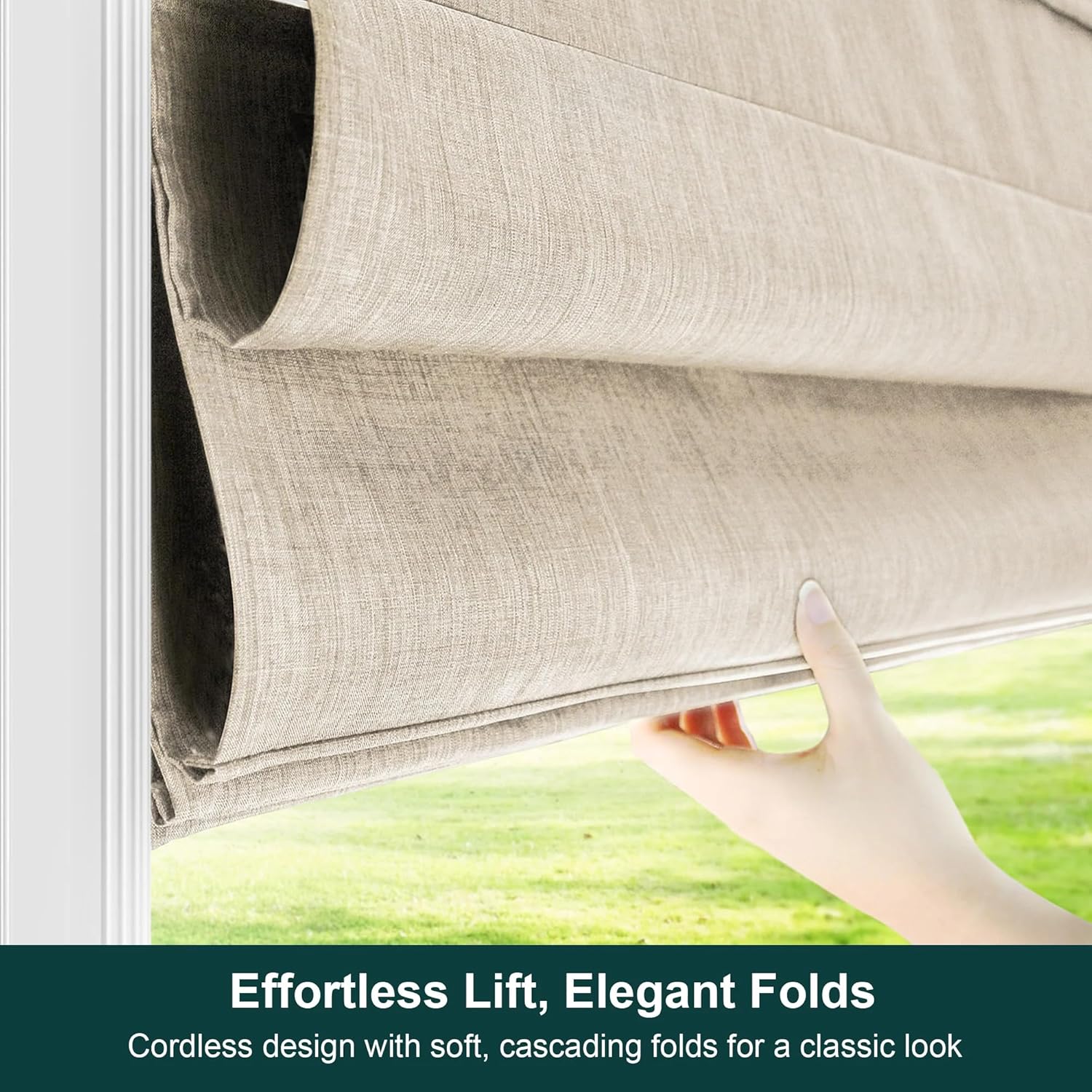
Roman shades, by contrast, fold the woven panel in soft horizontal pleats. The material bends along its weft lines (the horizontal threads), which is the direction natural weaves handle stress better. The tradeoff: those folds create a stack at the top of the window when the shade is raised. The Spruce, in their overview of shade types titled “Types of Window Shades: Pros, Cons, and How to Choose” (2025), notes that roman stacks can consume 6–12 inches of visible glass depending on shade height and ring spacing — a meaningful consideration on windows under 40 inches tall.
The practical implication: If your project involves windows taller than 48 inches, you want full light exposure when the shade is open, and you’re specifying woven materials in the mid-to-premium range, a roman construction is generally the more durable long-term choice. For shorter windows, smaller budgets, or situations where the shade will operate infrequently — a guest room, a pantry window — the roller format is serviceable and meaningfully cheaper.
The Four Natural-Texture Formats: Side-by-Side Comparison
Beyond roman and roller, there are two other natural-texture formats worth comparing seriously: woven-wood cellular shades (a honeycomb construction using natural-look materials) and flat-panel shoji-style shades (rigid panels that slide or pivot rather than raising). The sections below address each format in turn, with tier markers so you can orient to your budget quickly.
Woven-Wood Roman Shades
Roman shades are the workhorse of this category. Architectural Digest, in their 2025 feature “Natural Material Window Treatments That Work in Every Room,” describes the roman format as “the most versatile construction for organic texture,” and that tracks with what designers spec most frequently at the custom level. The fold geometry suits bamboo, seagrass, and jute well because bending along the weft is how natural weaves prefer to move. Cordless lift is now standard at every major retailer; motorized versions are available from Smith & Noble and The Shade Store at their custom tiers.
The main limitation is stack height. If you have transom windows or short casements, romans consume more visible glass than rollers do. For a 60-inch-tall window, a fully raised roman shade in a mid-weight bamboo material will typically stack 8–10 inches at the top — confirmed by specification data published by The Shade Store in their Natural Woven Shades Buying Guide (2025). That’s acceptable in most full-height residential windows and becomes a genuine constraint only on shorter openings.
Typical custom price range (36×60 window, 2025 retail): $180–$900+, depending on material, lining, and lift type.
 product image](/images/external/bd76952a563c.jpg)
TWOPAGES
$129.99
In stock on Amazon
Check price on AmazonWoven-Wood Roller Shades
Roller shades win on stack height and opening geometry. When fully raised, a roller shade leaves only the tube and bracket hardware visible — typically 2–4 inches — which is a significant visual advantage in rooms where you want an unobstructed view or maximum daylight. They’re also the budget entry point for this material category.
Apartment Therapy, in their 2024 piece “The Difference Between Roller Shades and Roman Shades, Explained,” flags that rollers are the go-to recommendation for smaller spaces where stack bulk matters, noting that the compact raised profile suits urban apartments and rooms with shorter windows where every inch of glass is meaningful.
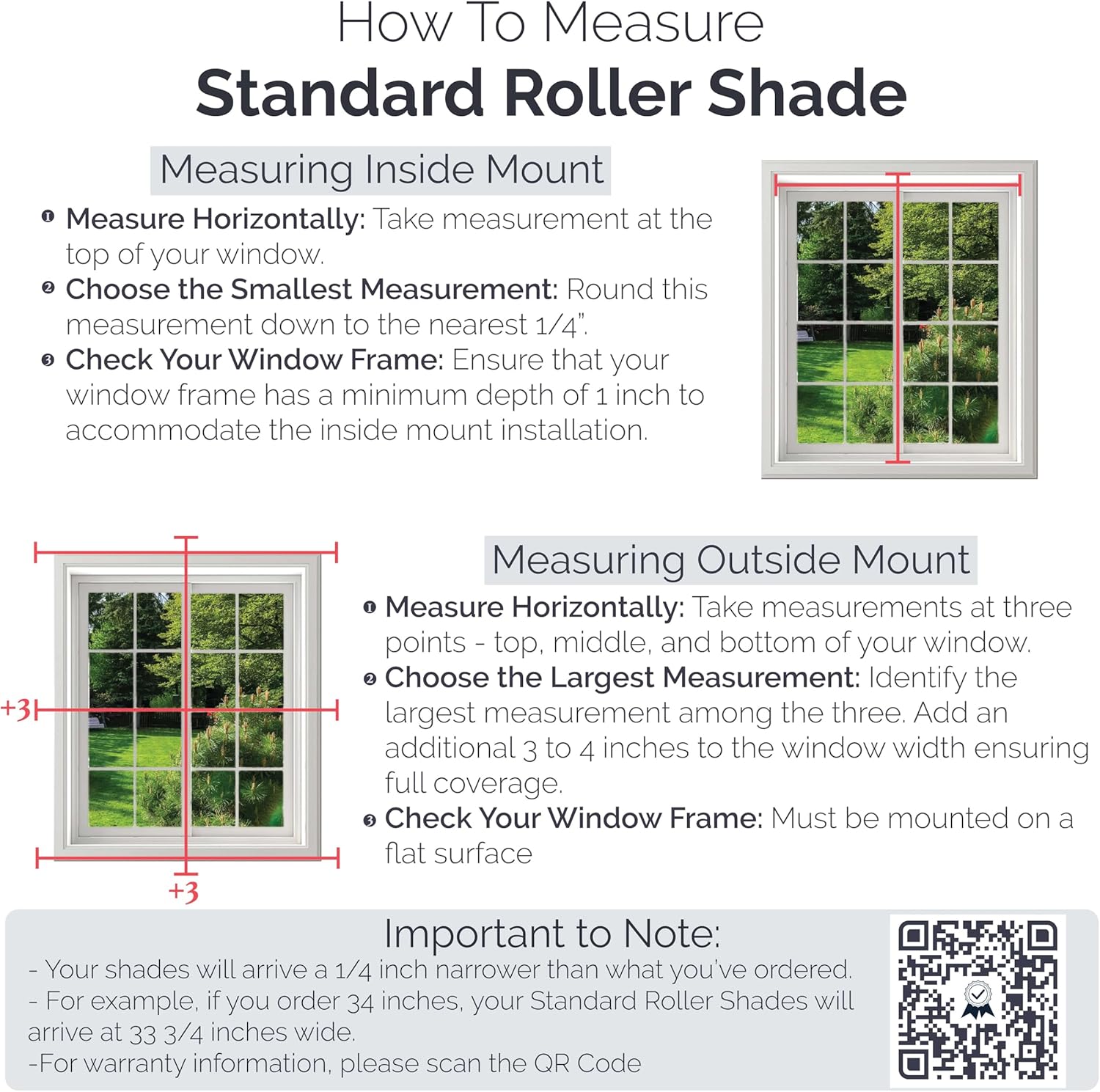
The durability caveat from the section above applies here directly. Specify a wide-tube option — at least 2 inches in diameter — if longevity matters. At the budget end of this format, tube diameter is often 1.5 inches or smaller, and that’s where reed stress accumulates fastest. The Shade Store’s product specification pages for their natural woven roller line (2025) document tube diameter as a listed spec precisely because it correlates with long-term performance in woven materials.
Typical custom price range (36×60 window, 2025 retail): $85–$450.
Linen
$59.56
In stock on Amazon
Check price on AmazonShoji-Style Panel Track Shades
Shoji-style panel track shades are a different animal. They don’t raise at all — they slide horizontally along a track, like a sliding glass door treatment. The rigid washi-paper or natural-material panels create a clean, architectural light diffusion that’s genuinely hard to replicate with a folding or rolling format.
Houzz’s editorial coverage of woven-wood and natural-material window treatment trends (2025) shows panel track shades increasingly being specified for open-plan living rooms and bedroom dividers, not just for windows. The clean horizontal lines and minimal hardware suit Japanese-influenced and Scandinavian-minimalist interiors particularly well.
The constraints are real: panel track shades require wall or ceiling track space to the side of the window — the panels have to go somewhere when the window is uncovered — and motorization options are limited compared to roman or roller formats. Most shoji-style installations remain manually operated. They’re also the highest-cost format in this comparison when specified at full custom scale.
Typical custom price range (single panel, 2025 retail): $250–$2,500+, depending on panel size, material, and track system.
TWOPAGES
$129.99
In stock on Amazon
Check price on AmazonNatural Cellular and Honeycomb Shades
Natural cellular shades occupy a niche worth knowing. The honeycomb construction — two bonded layers of material forming insulating air pockets — adds meaningful thermal performance that neither roman nor roller woven shades provide. For north-facing rooms, cold climates, or clients with energy efficiency as a stated priority, the functional case is strong.
The tradeoff is that natural-texture options in this format are narrower than in roman or roller constructions. Manufacturers are constrained by the need to bond cell layers cleanly, which limits how thick or irregular the weave can be. The organic, handcrafted look that makes bamboo roman shades so appealing is harder to achieve in a cellular format. Smith & Noble’s 2025 catalog lists several natural-look cellular options; The Spruce’s shade-type overview notes that cellular shades generally offer the best inherent insulation value in the shade category, which remains true even when the facing material is a natural-look textile rather than a true plant-fiber weave.
Stack height for natural cellular shades falls between roller and roman: typically 4–7 inches for a standard 60-inch shade, depending on cell size and ply count.
Typical custom price range (36×60 window, 2025 retail): $220–$700.
Chicology
$62.99
In stock on Amazon
Check price on AmazonLight Control: What “Natural Weave” Actually Means for Privacy
Every natural woven material is, by definition, semi-transparent. The tightness of the weave determines how much light passes through — the industry term is openness factor — and this is where practitioners most often have to manage client expectations before the installation goes in.
A tight jute or seagrass weave might have an openness factor of 3–5%, meaning very little direct light passes through but silhouettes will still be visible after dark with interior lights on. A loose matchstick bamboo can run 10–20% openness, which looks beautiful in daylight but offers essentially no nighttime privacy. The Shade Store’s Natural Woven Shades Buying Guide categorizes their materials by light-filtering versus room-darkening capacity, with room-darkening requiring an added liner — a fabric backing that blocks more light but changes the look and feel of the shade from both sides.
The decision rule here is simple but often skipped: consider what the window looks like from the street at 9 p.m., not at noon. Roman and roller formats both accept liners equally well. Shoji panels have their own fixed translucency profile that’s harder to modify after purchase. Natural cellular shades offer the best inherent privacy among natural-look options because the cell structure itself reduces direct sight lines through the material.
Motorization and Long-Run Maintenance
Motorization is increasingly a client expectation at the $500-per-shade threshold, and the format you choose affects your options.
Roman shades motorize cleanly. The folding mechanism is mechanically simple — a motorized lift system replaces the manual cord — and the major custom retailers offer it as a standard upgrade. Per Smith & Noble’s 2025 trade program materials, motorized woven-wood roman shades are among their most frequently specified products for full-home installations, with per-room costs ranging from $1,200 to $4,000+ depending on window count and material selection.
Roller shades motorize equally well at the mechanism level, but the tube durability issue re-emerges under motorized use. Motorized rollers cycle the tube more frequently and with more consistent torque than manual operation. Owner feedback aggregated by Houzz’s editorial team on this topic suggests motorized roller shades in natural woven materials benefit from annual inspection of the roll point for early signs of reed stress — something that rarely appears in product literature but matters for a client expecting a ten-year lifecycle.
Shoji panel tracks have the most limited motorization ecosystem. Linear motor systems exist but are custom-engineered and expensive; most shoji-style installations remain manually operated, which is worth flagging during the specification conversation.
If X, Then Y: The Decision Rule
After comparing formats across texture, durability, light control, stack geometry, and motorization:
-
If your priority is durability + motorization + full light-control flexibility: specify woven-wood roman shades with a cordless or motorized lift, and add a liner for any room where nighttime privacy matters. This is the lowest-risk, highest-satisfaction choice for full-home custom installations.
-
If your priority is minimal stack height or budget efficiency: woven-wood roller shades are the right call — but specify a wide-diameter tube (2 inches minimum) and set honest expectations about the 5–7 year replacement cycle in daily-use rooms.
-
If the project involves a large open-plan wall, a sliding door surround, or the client’s aesthetic is explicitly Japanese or Scandinavian-minimalist: shoji-style panel track shades earn serious consideration despite the motorization limitations and side-clearance requirements.
-
If the window faces north, the client mentions energy costs, or insulation is anywhere in the brief: add natural cellular to the comparison before finalizing the spec. The texture range is narrower, but the thermal performance argument is strong enough to revisit the material shortlist.
The texture of natural woven materials is genuinely hard to replicate with any synthetic alternative — that’s why this category keeps growing even as custom prices rise. Architectural Digest’s 2025 natural-material window treatment feature notes that demand has increased steadily among renovation clients commissioning full-home installs, with designers citing the material’s ability to anchor a room’s warmth without competing with furniture. The format question is really about making sure that warmth arrives in a construction that matches how the window will actually be used, day in and day out, for the next decade.