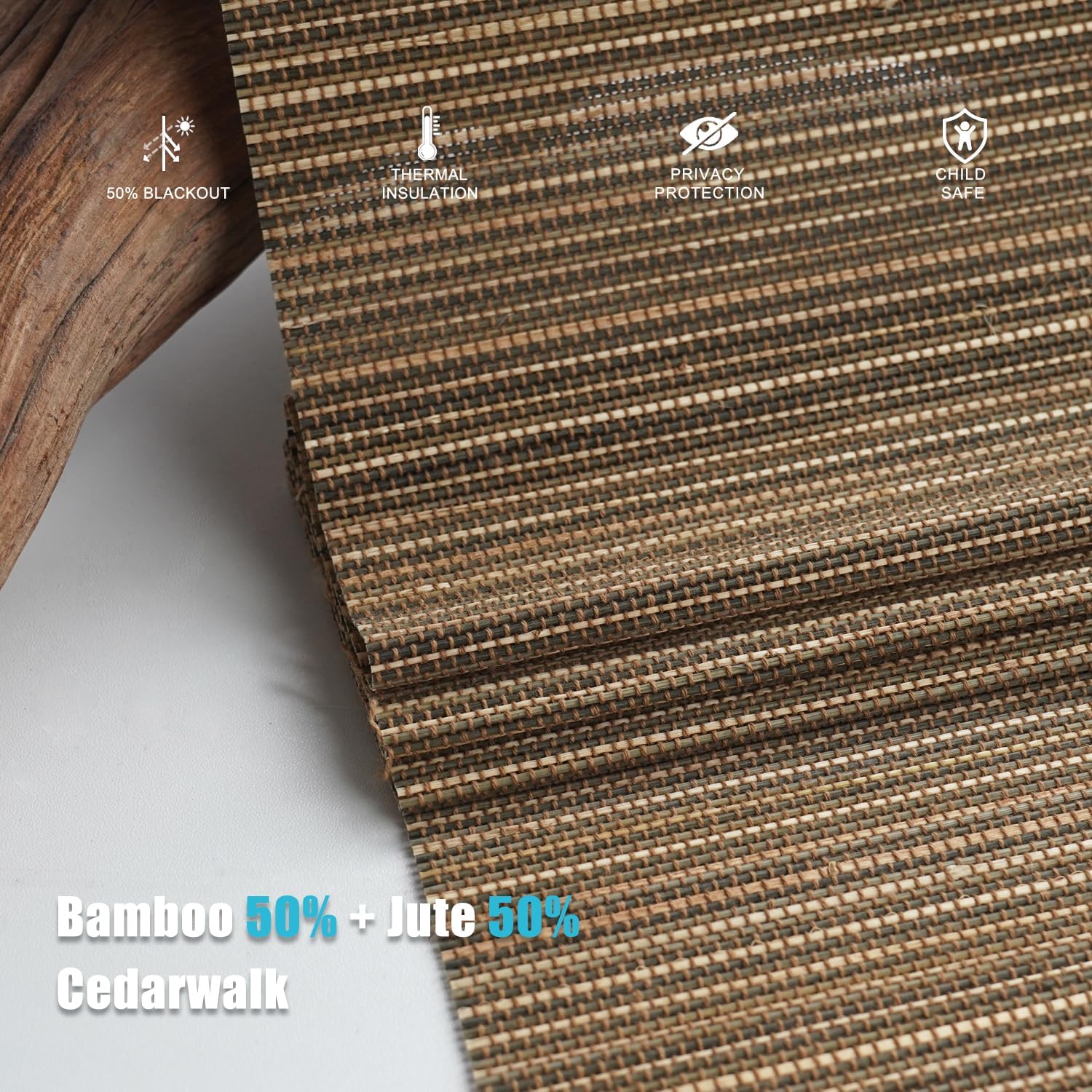
Motorized shades are exactly what they sound like: window coverings controlled by a small built-in motor rather than a cord or wand. You raise or lower them with a remote, an app, or a voice command. That last part — the voice command — is where it gets complicated. A shade that’s technically “motorized” isn’t automatically a shade that will respond to “Alexa, raise the living room blinds.” Whether your beautiful woven-grass or bamboo shade actually talks to your smart home depends on which motor is inside it, which wireless protocol that motor uses (the language it broadcasts — Wi-Fi, Z-Wave, Zigbee, or a proprietary radio signal), and whether your smart home hub speaks the same dialect. This guide walks you through how to match motorized natural shades to Alexa or Google Home without buying the wrong system twice. By the end, you’ll have a clear decision framework and a short list of products and configurations that are confirmed to work.
| EDITOR'S PICKMotorized Blinds | Mid-tier[TWOPAGES Woven Bamboo Cordless…](https://www.amazon.com/dp/B0CLXHP1RM?tag=greenflower20-20) | Budget pickMotorized Blinds with Valance C… | |
|---|---|---|---|
| Fabric Material | Grasscloth | Woven Bamboo | Grasscloth |
| Mounting Type | No Drill | No Drill | — |
| Valance Incl | — | — | ✓ |
| Remote Incl | — | ✓ | ✓ |
| Price | $162.99 | $139.99 | $43.95 |
| See on Amazon → | See on Amazon → | See on Amazon → |
Why Natural Shades and Smart Home Integration Are a Surprisingly Awkward Combination
If you’ve priced motorized woven-wood or bamboo shades recently, you already know the premium is real. A single motorized shade from a retailer like The Shade Store or Smith & Noble typically runs $300–$900 per window before any hub or bridge hardware. That cost is driven partly by material — authentic woven grasses, rattan, and bamboo require hand-finishing that polyester honeycomb shades don’t — and partly by the motor itself. What makes integration tricky is that the natural-shade category is dominated by a smaller number of manufacturers, and not all of them have kept pace with the smart home ecosystem at the same speed.
The core issue: many motorized woven-wood shades use RF (radio frequency) motors — motors that respond to a dedicated remote or wall switch but do not connect directly to Wi-Fi and therefore cannot be found natively by Alexa or Google Home. To bridge that gap, you need either a smart hub (a small box that translates between the shade’s radio language and your home network) or a shade system that uses a motor speaking a protocol Alexa and Google Home can already understand, like Zigbee or Z-Wave. Skipping this step is the single most common and expensive mistake buyers in this category make.
The Protocol Map: Which Motor Languages Work With Which Systems
Understanding the three main motor categories will let you evaluate any product listing in about 90 seconds.
1. Wi-Fi Native Motors These motors connect directly to your home’s 2.4GHz Wi-Fi network. No hub required. Once set up in the brand’s app, you enable the relevant Alexa or Google Home skill and your shades appear as smart home devices. Lutron’s Serena line and Somfy’s TaHoma Wi-Fi-enabled products fall here. The tradeoff: Wi-Fi motors are slightly bulkier, can be sensitive to signal dead zones, and the natural-shade selection in this category is narrower than you’d like.
2. Proprietary RF + Required Bridge This is where most of the premium woven-wood and bamboo shade market lives. Hunter Douglas’s PowerView system — the most widely specified motorized shade platform in custom interior design — uses its own RF protocol. PowerView Gen 3 (launched 2024, now widely available as of early 2026) integrates directly with Alexa and Google Home once you have the PowerView Hub, which runs approximately $99–$149. Per Hunter Douglas’s PowerView Gen 3 Integration Guide, Alexa and Google Home can discover PowerView shades natively after hub pairing, with scene and grouping support included. This is reliable and well-documented — but the hub is non-optional and adds to project cost.
3. Z-Wave / Zigbee Motors These are less common in natural-shade lines but worth knowing. Z-Wave and Zigbee are mesh wireless protocols common in whole-home automation. If your home already runs a SmartThings hub, a Control4 system, or a Hubitat setup, shades with Z-Wave or Zigbee motors will drop in cleanly. Somfy offers Zigbee-compatible motors in some of its natural-shade configurations. The tradeoff: sourcing these can require going through a specialty AV or smart home integrator rather than a retail channel.
By the Numbers
| Platform | Native Voice Control | Hub Required | Estimated Hub Cost | Natural Shade Selection |
|---|---|---|---|---|
| Hunter Douglas PowerView Gen 3 | Alexa + Google Home | Yes (PowerView Hub) | ~$99–$149 | Excellent (woven wood, bamboo, shoji) |
| Lutron Serena | Alexa + Google Home | No (Wi-Fi native) | $0 | Moderate (limited woven options) |
| Somfy TaHoma Wi-Fi | Alexa + Google Home | No (Wi-Fi native) | $0 | Good (natural shade partners vary) |
| Somfy Zigbee | Alexa + Google Home via SmartThings / Hubitat | Yes (existing hub) | Varies | Good if integrator-sourced |
Sources: Wirecutter’s “The Best Motorized Blinds” (updated 2025); Hunter Douglas PowerView Gen 3 Integration Guide; Somfy published product specifications.
The Woven-Wood and Bamboo Shade Lines Worth Specifying
This is where most intermediate buyers need the clearest guidance: which specific shade lines carry motors that actually deliver on smart home promises?
Hunter Douglas Provenance Woven Wood Shades (PowerView Gen 3) Hunter Douglas’s Provenance line is the benchmark for motorized natural shades at the custom tier. Available through The Shade Store and authorized dealers, Provenance covers woven grasses, jute, bamboo, and rattan weaves with inside and outside mount options and motorization in most cell sizes. PowerView Gen 3 is the motor platform to specify — Gen 2 works but requires a separate hub and lacks some newer voice-scene capabilities. Owners on Houzz’s “Woven Wood Shades: What Homeowners Wish They’d Known” thread consistently note that once the hub is configured, Alexa and Google Home routines (sunrise open, sunset close) work reliably. The frustration point flagged repeatedly: initial pairing requires careful attention to hub placement and Wi-Fi channel, and first-gen setup without dealer support produces a disproportionate share of complaints.
The Shade Store Motorized Woven Wood Roman Shades (Somfy-Powered) The Shade Store’s custom roman shades in natural materials use Somfy motors on most motorized SKUs, with their myLink bridge enabling Alexa and Google Home integration. Per The Shade Store’s motorization documentation, myLink adds approximately $99 to the project cost and turns any Somfy-motored shade into a voice-controllable device. The Shade Store’s natural material roman shades run $400–$1,200+ per window motorized; this is the line to cite when you’re spec’ing for a client who wants editorial-quality texture with reliable smart home integration and doesn’t want a Hunter Douglas-exclusive system.
SelectBlinds Motorized Woven Wood Shades (Mid-Market) For mid-range buyers — $200–$500 per window — SelectBlinds offers motorized woven-wood roller shades with a proprietary RF motor and a separately sold hub for smart home integration. Apartment Therapy’s 2025 review of smart shades that work with Alexa flagged SelectBlinds as a solid value option for buyers who accept a slightly less polished app experience in exchange for meaningful price savings. Voice control works, but scene sophistication (grouping multiple shades into a single room command) is more limited than the Hunter Douglas or Shade Store systems.
Blinds.com Motorized Bamboo Roll Shades At the accessible end, Blinds.com’s motorized bamboo roll shades use a basic RF motor compatible with their own remote but require a third-party Zigbee or Z-Wave controller to bring Alexa/Google Home functionality into play. This is a workable path if you already have a SmartThings hub — buyers without existing home automation infrastructure will find the setup friction meaningful. Worth noting: at this price point ($150–$300 motorized), the motor is doing real work, but Wirecutter’s 2025 motorized blinds guide notes that budget-tier motors in woven and bamboo materials show more variance in long-run reliability than premium systems.
The Hub Decision: When to Pay for It and When to Avoid It
The hub question is where intermediate buyers most often hesitate. Here’s the decision logic:
Pay for the hub if: You’re specifying more than two windows, you want grouping (raising all living room shades with one command), or your client/project is in a whole-home renovation context where automation will extend beyond shades. At two or more windows, the hub cost amortizes to noise. Hunter Douglas’s PowerView Hub and Somfy’s myLink both support up to 30+ shades per hub.
Skip the hub and go Wi-Fi native if: You’re doing a single-room, limited installation for a renter or a homeowner who won’t be scaling the system. Lutron Serena woven shades are the cleanest hub-free option here — direct Wi-Fi, strong Alexa/Google Home skill, and a natural woven selection that works for most mid-market applications, though the texture range is narrower than Hunter Douglas.
Use your existing hub if: You already run SmartThings, Hubitat, or a Control4 system. In that case, Z-Wave or Zigbee Somfy motors are the most efficient path and avoid adding yet another proprietary hub to the stack.
One detail that surprises even experienced buyers: Alexa’s “smart home groups” and Google Home’s “room” assignments work best when all shades in a room share the same hub and brand. Mixed systems — half PowerView, half Somfy myLink — can both respond to voice, but cross-brand room scenes are unreliable. Per Wirecutter’s 2025 guide, mixing shade brands in a single Alexa smart home group is a known friction point that vendor support consistently underestimates.
Real-World Tradeoffs You’ll Hit in the Field
A few patterns that show up consistently in owner reviews and design community discussions:
Light bleed and motor housing. Motorized natural shades have a slightly larger headrail than their cordless manual counterparts to accommodate the motor. On inside-mount installations — which are preferred for clean framing — this can reduce effective shade width and increase light gap at the sides. Elle Decor’s Spring 2026 feature on natural texture interiors notes that designers frequently compensate by specifying outside-mount motorized woven shades, which allows a full coverage overlap without the motor housing eating into the window reveal.
Battery vs. hardwired. Most mid-range motorized bamboo and woven-wood shades at retail run on rechargeable battery packs. Battery life at normal use is typically 6–18 months per charge depending on motor and shade size. Hardwired motors are available at the custom tier (Hunter Douglas Provenance hardwired is an option through dealer channels) but require an electrician and are rarely feasible in renovation retrofits without opening walls. For most installations, battery-powered motors are the practical default — just flag the recharging cycle to clients.
Mesh weave and IR interference. Open-weave natural shades don’t interfere with RF or Wi-Fi signals, but very tightly woven bamboo slat shades with foil backings — common in blackout bamboo configurations — can occasionally affect IR remote line-of-sight. This is an edge case, but worth checking with the manufacturer when specifying a motorized blackout bamboo shade paired with an IR-based remote.
Decision Rules
If you’re at specification or purchase stage right now, here’s where to land:
-
If the project is whole-home, custom, $600+ per window: Specify Hunter Douglas Provenance with PowerView Gen 3 and budget the hub. It’s the most tested, most dealer-supported system in the category, and the Alexa/Google Home integration is the most robust available for woven natural shades.
-
If the project is one or two rooms, mid-market, $200–$500 per window: The Shade Store’s Somfy-motored woven roman shades with the myLink bridge are the cleanest balance of material quality, voice control reliability, and price. SelectBlinds is a workable step down if budget is the binding constraint.
-
If the client already has a home automation system (SmartThings, Control4): Source Zigbee or Z-Wave Somfy motors through an integrator and skip adding a new proprietary hub to the stack.
-
If it’s a renter or single-room install under $300: Lutron Serena woven shades without a hub are the lowest-friction path to genuine Alexa/Google Home control. Accept the narrower natural material selection as the cost of simplicity.
The one rule that holds across all tiers: confirm the voice-control integration path before ordering, not after. Motor brand, hub requirement, and protocol all need to match your smart home platform. A shade that motorizes beautifully but sits outside your smart home ecosystem is a remote-control shade — and at these prices, that’s not what you paid for.