If you’ve been pricing bamboo shades — the woven, natural-material window coverings made from grasses, reeds, and bamboo stalks that filter light with a warm, organic glow — you’ve probably noticed the price range is enormous. A single shade can run anywhere from $20 to $600 or more, and the listings don’t always explain why. Part of that gap comes down to one foundational decision: are you buying a standard size (a pre-made shade manufactured in fixed dimensions, like 27” × 72”) or a custom size (a shade cut and built to your exact window measurements)? Standard shades cost less upfront but rarely fit perfectly. Custom shades fit beautifully but come with a price premium and a lead time that can stretch two to six weeks. This guide breaks down the real price difference, identifies the specific situations where standard sizing is genuinely adequate, and maps the scenarios where going custom from the start is the only move that avoids an expensive do-over.
| EDITOR'S PICK[TWOPAGES Woven Bamboo Cordless](https://www.amazon.com/dp/B0CLXHP1RM?tag=greenflower20-20)… | Mid-tier[MOOD Custom Bamboo Shades](https://www.amazon.com/dp/B09134FBVY?tag=greenflower20-20) | Budget pick[Aimnid Natural Cordless Woven W](https://www.amazon.com/dp/B0FJDBGX9J?tag=greenflower20-20)… | |
|---|---|---|---|
| Motorized | ✓ | — | — |
| Material | Woven Bamboo | Bamboo | Woven Wood |
| Valance Included | — | — | ✓ |
| Price | $139.99 | $67.99 | $59.29 |
| See on Amazon → | See on Amazon → | See on Amazon → |
What “Standard” and “Custom” Actually Mean in the Bamboo Shade Market
Standard-size bamboo shades are manufactured in bulk at set width-and-length combinations — typically in two-to-three-inch width increments (24”, 27”, 30”, 33”, 36”, 48”, 72”) and one or two length options per width. You choose the closest match to your window, mount the shade, and live with whatever gap remains. Big-box retailers and entry-tier online blind sellers stock this format. The production efficiency is what keeps the price low.
Custom bamboo shades are built to a specification you provide — width to the 1/8 inch, length to the 1/4 inch — at the time of order. There is no warehouse inventory to pull from. The shade is woven, cut, hemmed, and fitted with hardware (rail, cord or cordless lift, liner if selected) after your order is placed. Smith & Noble and The Shade Store operate almost exclusively in this space for natural shades at their respective quality tiers.
The operational distinction matters for more than fit. Custom production also unlocks liner options (privacy or room-darkening), lift-mechanism upgrades (cordless, motorized) available across the full size range, specific weave and texture grades not carried in standard lines, and outside-mount sizing where you intentionally order wider or longer than the window opening to maximize coverage. Standard lines typically offer cordless in limited sizes only and no liner upgrade path at all, a point reinforced by buying-guide coverage in This Old House, “How to Buy Window Blinds and Shades.”
The Real Price Gap: A Tier-by-Tier Breakdown
Here is where buyers get burned: the sticker price difference between standard and custom looks modest until you factor in the full cost of making a standard shade work — or the cost of replacing it when it doesn’t.
Representative pricing, single shade, approximate 36” × 64” size, mid-2026:
| Format | Retailer tier | Shade price | Typical extras | Total landed |
|---|---|---|---|---|
| Standard, no liner | Big-box / entry online | $28–$75 | None | $28–$75 |
| Standard, cordless upgrade | Entry-tier online | $55–$120 | None | $55–$120 |
| Custom, no liner, cordless | Mid-tier online | $130–$220 | $0–$25 shipping | $130–$245 |
| Custom, privacy liner, cordless | Smith & Noble / The Shade Store | $280–$480 | $0 (free ship) | $280–$480 |
| Custom, motorized, blackout liner | Premium retailer | $550–$900+ | $0 | $550–$900+ |
Pricing sourced from published retailer product pages and Smith & Noble’s custom shade pricing documentation, May 2026. Prices shift seasonally — Memorial Day and Labor Day sales routinely drop custom pricing 25–35% at major custom retailers.
The gap between a standard shade and a basic custom shade at the same nominal size is roughly $60–$150 per window. Across a five-window living room refresh, that is $300–$750 in additional spend before a single upgrade is added. That math is why the reflexive “just go custom” advice deserves scrutiny — and why understanding the three tiers clearly matters before you place any order.
Three Tiers, Three Verdicts
Budget Tier: Standard Sizes for Informal Rooms and Rental Spaces
Standard bamboo shades are underrated for specific use cases. Practitioners who reflexively steer clients toward custom leave real money on the table or price clients out of the category entirely.
Standard sizing works well when the window is close to a stocked dimension, when the room is informal or transitional, and when a firm budget ceiling makes the premium untenable. The Spruce, in its home improvement guide “How to Measure for Window Blinds and Shades,” notes that outside-mount installations are specifically designed to accommodate size tolerance — you order at or just above the window opening width, which is exactly what standard sizes enable for outside-mount contexts. A sunroom, a rental apartment bedroom, or a vacation home are contexts where a slight gap at the edge carries almost no visual or functional penalty.
Standard sizing also works as a legitimate sample strategy. If a client is undecided between a tight-weave woven wood and an open-slat matchstick shade, a $55 standard shade lets you evaluate the light diffusion and texture in the actual space before committing to a larger custom order. Bob Vila’s product review roundup “Best Bamboo Blinds of 2025” consistently surfaces standard-tier options as valid choices for renters and budget refreshes, with the editorial consensus being that they perform adequately when sized well for outside-mount applications.
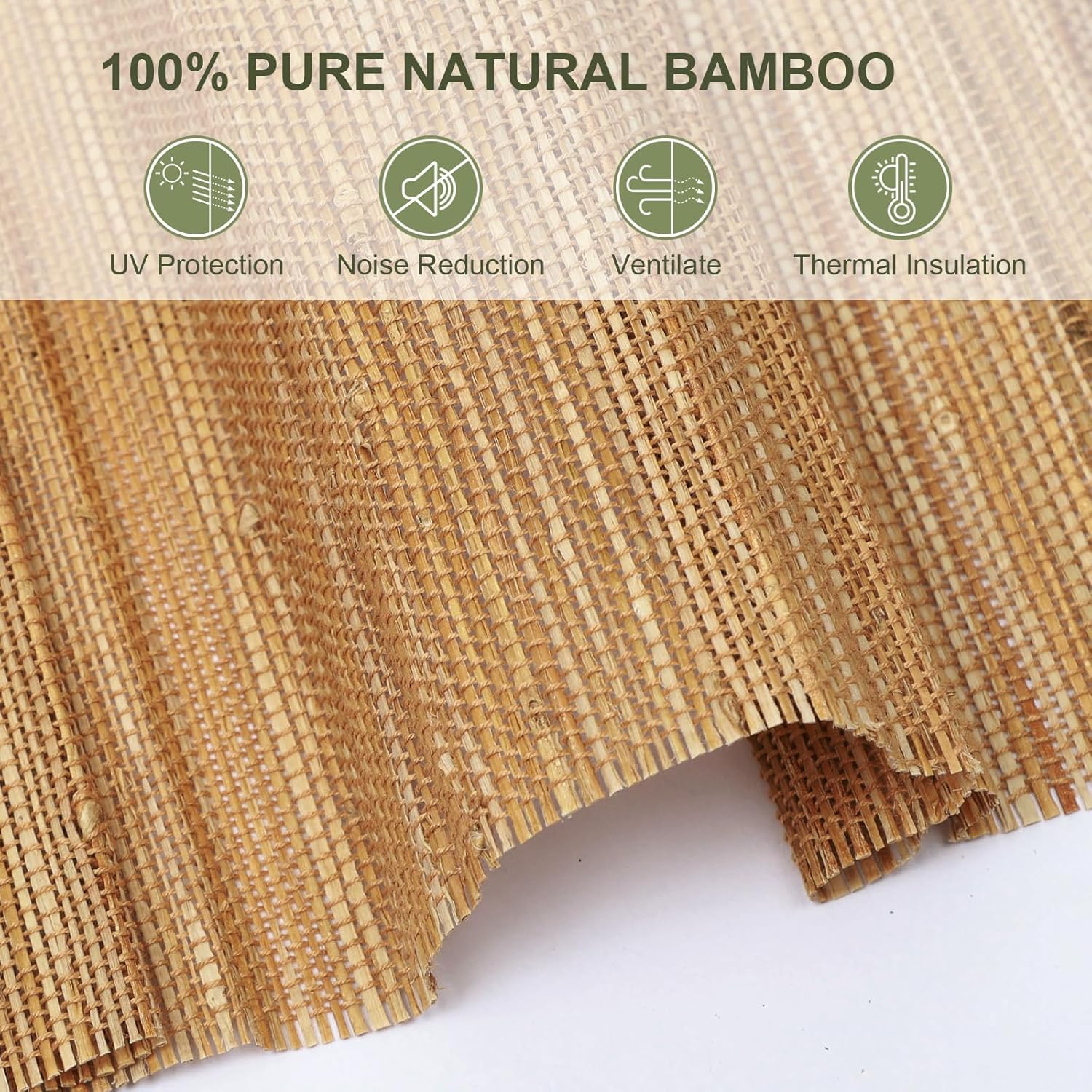
Aimnid
$59.29
In stock on Amazon
Check price on AmazonMid-Tier: Entry Custom for Precise Fits Without Premium Liner or Motor
When standard sizing fails, the first upgrade is entry-level custom — a shade built to your exact dimensions with cordless lift, no liner, from a mid-tier online retailer. This tier closes the fit gap without the full price premium of a designer-channel order.
Entry custom is the right call when your window falls between standard increments. Older homes and custom construction routinely produce windows that land in non-standard places — a 31.75” opening, a 41” rough opening, a 67” height. The Shade Store’s measuring documentation for woven wood shades specifies a 1/4” deduction from the rough opening for inside-mount installations — a tolerance that a 33” standard shade cannot meet for a 31.75” window without leaving a visible 1.25” gap on each side.
This tier is also the correct default for inside-mount applications in primary rooms. Inside-mount installation — where the shade sits inside the window frame, flush with the wall plane — reads cleaner, emphasizes the window architecture, and is the approach This Old House recommends for design-forward installations. Inside-mount demands precision sizing. Standard shades, which are sized for outside-mount flexibility, are almost never the right tool here. Entry custom resolves this without requiring the full investment of a designer-tier order.
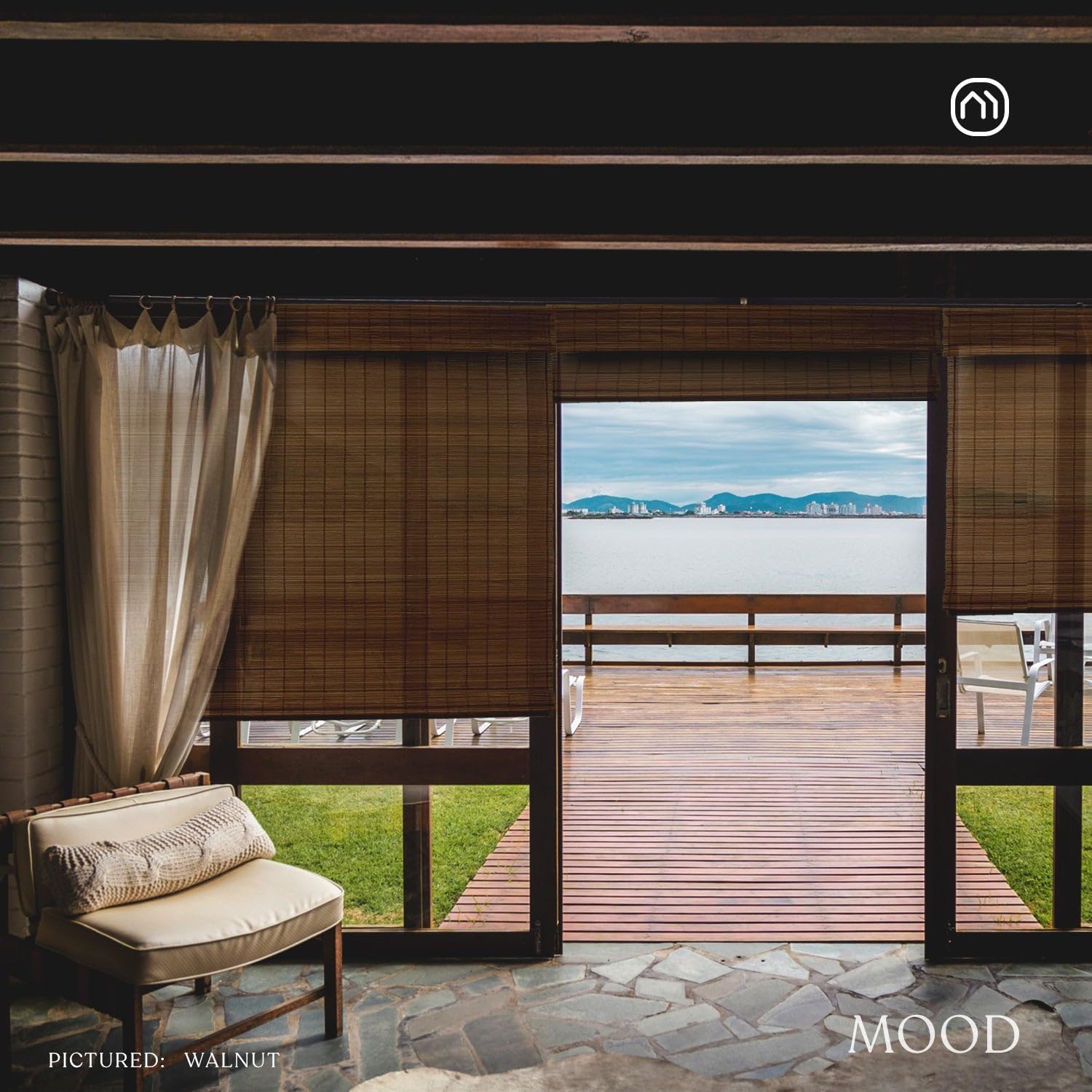
MOOD
$67.99
In stock on Amazon
Check price on AmazonPremium Tier: Full Custom for Liner, Motorization, and Lot-Matched Multiples
There are scenarios where standard sizing isn’t a workaround — it’s a liability. And there are scenarios where even entry custom isn’t sufficient. The premium custom tier covers these situations.
Privacy and light-block requirements. Standard bamboo shades ship without liner options in almost all retail contexts. If a project requires privacy liner or room-darkening liner, custom is the only path. Smith & Noble’s custom pricing documentation notes that liner additions represent a significant percentage increase over base shade cost, and that liner is specified at order time — not retrofitted. Attempting to retrofit liner to a standard shade voids most warranties and produces uneven tension.
Motorization. No standard bamboo shade in the mainstream retail market (as of mid-2026) ships motor-ready in a meaningful range of sizes. Motorized woven wood and bamboo shades are a fully custom product category. The Shade Store’s motorization documentation for natural shades confirms that all motorized options are built-to-order with no stocked-size exceptions.
Lot-matched multiples. Houzz project documentation and community reviews from its woven wood shade coverage consistently flag color and weave-lot variation as a top complaint when standard bamboo shades are ordered across multiple windows at different times. Custom orders from a single production run can be lot-matched — a service Smith & Noble and The Shade Store explicitly offer — which eliminates the warm-versus-cool tone inconsistency that plagues multi-window standard orders. Apartment Therapy’s editorial feature on bamboo and woven wood shades notes that weave and tone consistency is among the first things designers verify when specifying natural shades for open-plan rooms where multiple windows are visible simultaneously.
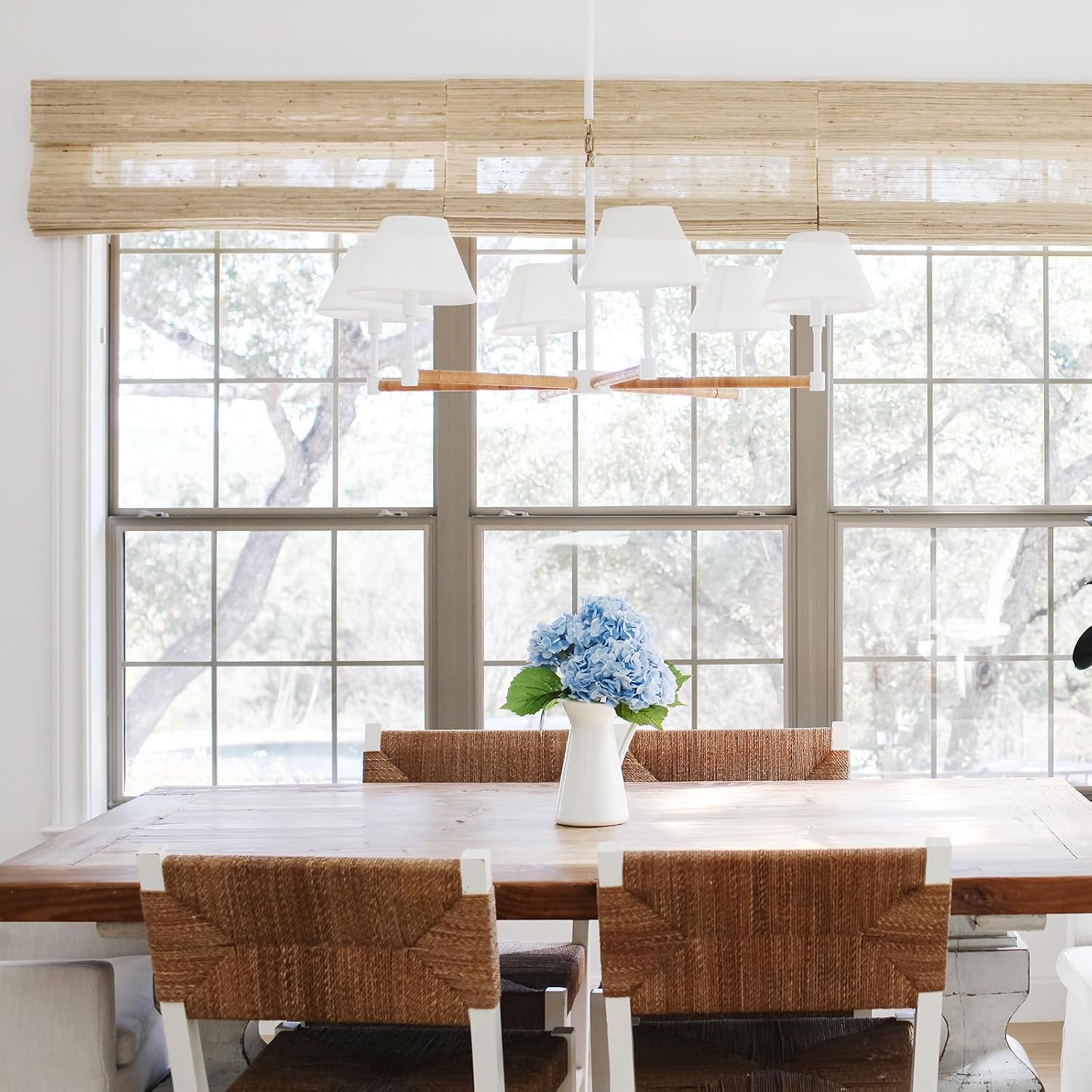
TWOPAGES
$139.99
In stock on Amazon
Check price on AmazonThe Hidden Cost Most Buyers Don’t Model
The real price gap between custom and standard isn’t just the per-shade difference. It’s the replacement cost when standard doesn’t work.
A standard shade ordered for an inside-mount application that turns out to have a 1.5” gap on each side has two outcomes: the buyer lives with it — a design failure visible every day — or they re-order a custom shade. At that point they have spent $75 on the standard shade, up to $25 on shipping, and time on the return — and they still need to buy the custom shade they should have ordered first. The total cost of that decision path is $75–$100 higher than going custom from the start.
This math is why experienced designers and design-build contractors sourcing through trade programs at The Shade Store or Smith & Noble rarely spec standard sizes for primary rooms. The margin for error simply isn’t there when the client is paying for a finished installation. This Old House’s buying guide for window blinds and shades specifically cautions readers to measure twice before ordering in any format, noting that non-refundable custom orders amplify the cost of a measuring error — but that standard orders carry their own hidden cost when the size simply doesn’t fit the application.
The Decision Rule
If you’re in the middle of a buying decision right now, here is the framework:
-
If your window is within 1/4” of a standard size AND you’re doing outside-mount AND the room is informal: Standard is defensible. Save the $100–$200 per window and put it toward a better material tier on the custom windows elsewhere in the home.
-
If you need inside-mount precision, liner, motorization, or lot-matched multiples across several windows: Go custom from the first call. The “savings” on standard are illusory once you price the do-over.
-
If you’re on the fence: Request samples from The Shade Store or Smith & Noble — both ship free material samples — and measure your rough openings precisely before placing any order. The 20 minutes you spend with a tape measure and a sample in hand will make the standard-versus-custom question answer itself.
The price gap between custom and standard bamboo shades is real — typically $80–$200 per window at comparable material quality. Whether that gap is worth crossing depends entirely on your window dimensions, your mount type, and how much friction you’re willing to accept from a shade that almost fits. In primary rooms with precision requirements, almost is never close enough.